
NOWOŚĆ
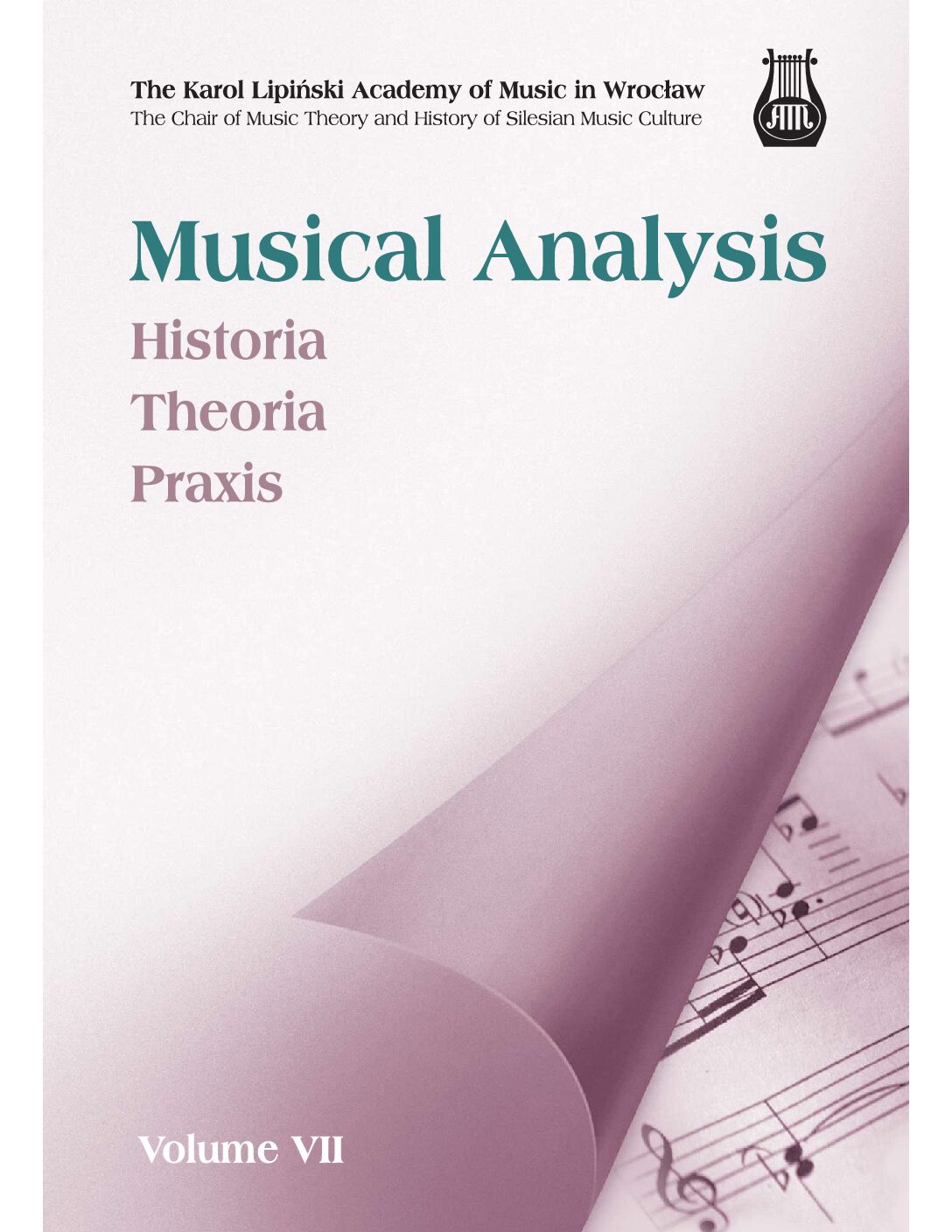
Musical Analysis. Historia – Theoria – Praxis. Vol. 7
60,00 zł
red. Anna Granat-Janki et al.
Wrocław 2025
Na stanie
Opis
This is the seventh volume of the collective monograph devoted to music-analytical studies, the aim of which is to present musical analysis from historical, theoretical, and practical perspectives. The range of issues addressed is broad, as the authors – musicologists, music theorists, and composers from various academic centres in Poland and abroad (Austria, France, Germany, Lithuania, Serbia, Spain, and United Kingdom) – represent different research approaches, including semiotic, hermeneutic, axiological, and intertextual ones, and use different concepts and methods of analysing and interpreting a musical work in the search for sense and meaning in music. What draws attention is the wide application of analysis, including in the study of the relationship between music and the word, in the exploration of issues of genre, style, and compositional technique, as well as those of expression and narrative in music. The questions of performance and reception of music are also raised. We hope that the diverse discourses on music and different perspectives on musical analysis presented in this volume of Musical Analysis. Historia – Theoria – Praxis will prove insightful and interesting to readers.
Informacje dodatkowe
| Waga | 750 g |
|---|
Spis treści
ContentsIntroduction
MUSICAL NARRATOLOGY AND PERFORMER'S ANALYSIS
Márta Grabócz Musical Narratology: Theory, Analysis, Performance
Joan Grimalt Rubato as a Sign of Subjectivity. Franz Schubert’s Impromptu No.1 in C Minor, Op.90: A Performer’s Analysis
HERMENEUTICS, SEMIOTICS
Nicholas P.McKay Igor Stravinsky’s Espressivo Enigma
Jean-Marie Jacono When a Formal Analysis Is No Longer Possible: Pictures at an Exhibition by Modest Petrovich Mussorgsky and Its Political Contexts
Małgorzata Grajter João Domingos Bomtempo’s Grand Fantasia in C Minor, Op.14: Form and Expression
Carlos Villar-Taboada In the Maze of the Night: Rodolfo Halffter’s Dialogues with History in Piano Works around 1970
GENEOLOGY, INTERTEXTUALITY
Gražina Daunoravičienė Music Genotype in Contemporaneity: Hypothesis of Evolution
Violetta Przech Bettina Skrzypczak’s String Quartet No.3 in the Context of the Tradition of the Genre. Ideas – Structure – Sound – Aesthetics
Aleksandra Ferenc Rafał Augustyn’s Strings Quartets: A Reinterpretation of the GenreWORD–MUSIC RELATIONS, RHETORIC
Marek Nahajowski Andrzej Koszewski’s La Espero: A Famous but Unknown Masterpiece?
Aleksandra Pijarowska Music in Dialogue with the Word. Katarzyna Dziewiątkowska’s Vocal-and-Instrumental Lyric Works
AXIOLOGY OF MUSIC
Anna Nowak Music Infused with Values. On the Oeuvre of Hanna Kulenty
Anna Granat-Janki Spirituality in Music as an Object of Analysis: Based on the Oeuvre of Marcin Bortnowski
MUSICAL MEANING AND SIGNIFICANCE
Ivana Petković Lozo Interference between Berislav Popović’s Compositional and Music-Theoretical Écriture: String Quartet (1962) and Music Form or Meaning in Music (1998)
Ewa Schreiber Music and the Child’s Discovery. Ein Kinderspiel by Helmut Lachenmann
Joanna Schiller-Rydzewska Listening to Gdańsk: An Audiospheric Reminder of the City by Elżbieta Sikora
Katarzyna Bartos Madness and Clarity of Thought in the ‘Tarantella’ from John Corigliano’s Symphony No.1
CONCEPTIONS AND METHODS OD MUSIC ANALYSIS
Katarzyna Szymańska-Stułka The Musical Mindfulness in the Reception of a Musical Work: The Case of Anitya by Ignacy Zalewski
Gesine Schröder Poetic Counterpoint Practice and the Leipzig Counterpoint Theory of the19th Century
Tomasz Kienik On the Instructive Usefulness of Twentieth-Century Analytical Methods and Tools: A Comparative Study of Four Works for Solo Flute by Sofia Gubaidulina, Jeff Manookian, Werner de Blesser, and Frederic Rzewski
RECONNAISSANCE OF SELECTED COMPOSER'S WORKS
Miłosz Kula Not only Bajka [Fairy tale]. Stanisław Moniuszko’s Symphonic Output According to the Newest Research
Katarzyna Dziewiątkowska Ennio Morricone’s Soundscape in the Film Lolita (1997) by Adriane Lyne
Martyna Krymska-Renk Pieces for Solo Instrument and Piano by Leszek Wisłocki in the Context of His Compositional Output: A Reconnaissance and Reflection
Może spodoba się również…


Podobne produkty
-
Magnificat. Od biblijnego tekstu do polskiej kompozycji muzycznej XX i początków XXI wieku
50,00 zł Dodaj do koszyka -
Uczeń – nauczyciel – rodzic w rzeczywistości edukacji muzycznej. Triada w kryzysie?
30,00 zł Dodaj do koszyka -
Współczesna chóralistyka (tom 2)
25,00 zł Dodaj do koszyka -

Sonaty wiolonczelowe. Eccles, Tessarini, Caporale, Sammartini
15,00 zł Dodaj do koszyka